ND Plastering

Skimming walls and ceilings: what the job involves

How a skim is done: preparing the surface, bonding where needed, two coats of finish plaster, drying, the mist coat, and when a wall needs more than a skim.

Modern kitchen with smooth grey walls and a glazed door

Skimming lays a thin coat of finish plaster over an existing wall or ceiling to give it a smooth, flat face for paint. It is the usual answer to walls scarred by stripped wallpaper and patches of old filler, and to new plasterboard that needs a hard plaster finish. On a surface that is sound underneath, a skim can make a tired room look new.

The trowel work is the part people picture, but what decides how long the finish lasts happens before it, while the surface is prepared, and after it, while the plaster dries. Each stage is covered here in order, followed by the signs that a wall needs re-plastering or boarding instead.

Key takeaways

  • Tap the wall before anything else: plaster that sounds hollow or crumbles has to be cut out or boarded over, because a skim cannot hold a loose surface on.
  • Diluted PVA suits a dusty or very absorbent modern surface, but on old solid walls it can seal in moisture that needs to escape.
  • Plaster looks dry on the surface well before it is dry right through, and emulsion on wet plaster is likely to crack and peel.
  • A mist coat of watered-down emulsion goes on first and soaks in, so the colour coats have something to grip.
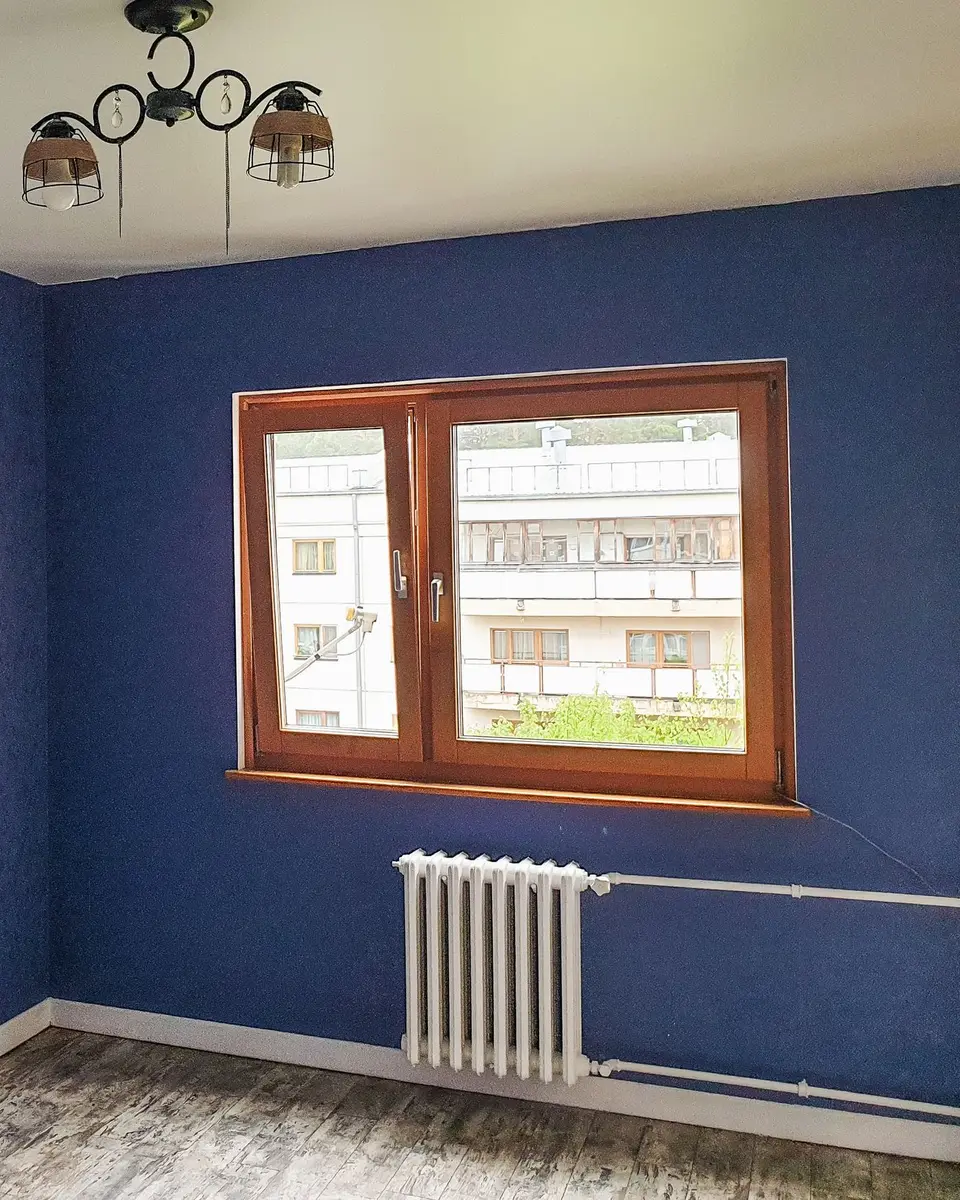
Empty room with blue walls and a wooden window

What a skim can and cannot fix

A skim is a finishing coat, not a repair for what lies beneath it. It evens out the surface, but it will not straighten a badly bowed wall or stick loose plaster back to the brickwork. It suits surfaces that are basically sound, such as firmly bonded old plaster or plasterboard.

In an older terrace around Bradford, the walls may carry several rounds of patching under the paint. A skim over that works when every layer is holding fast, so tap along the wall with your knuckles and listen for hollow patches.

When the wall passes that test, skimming is usually all it needs before decorating.
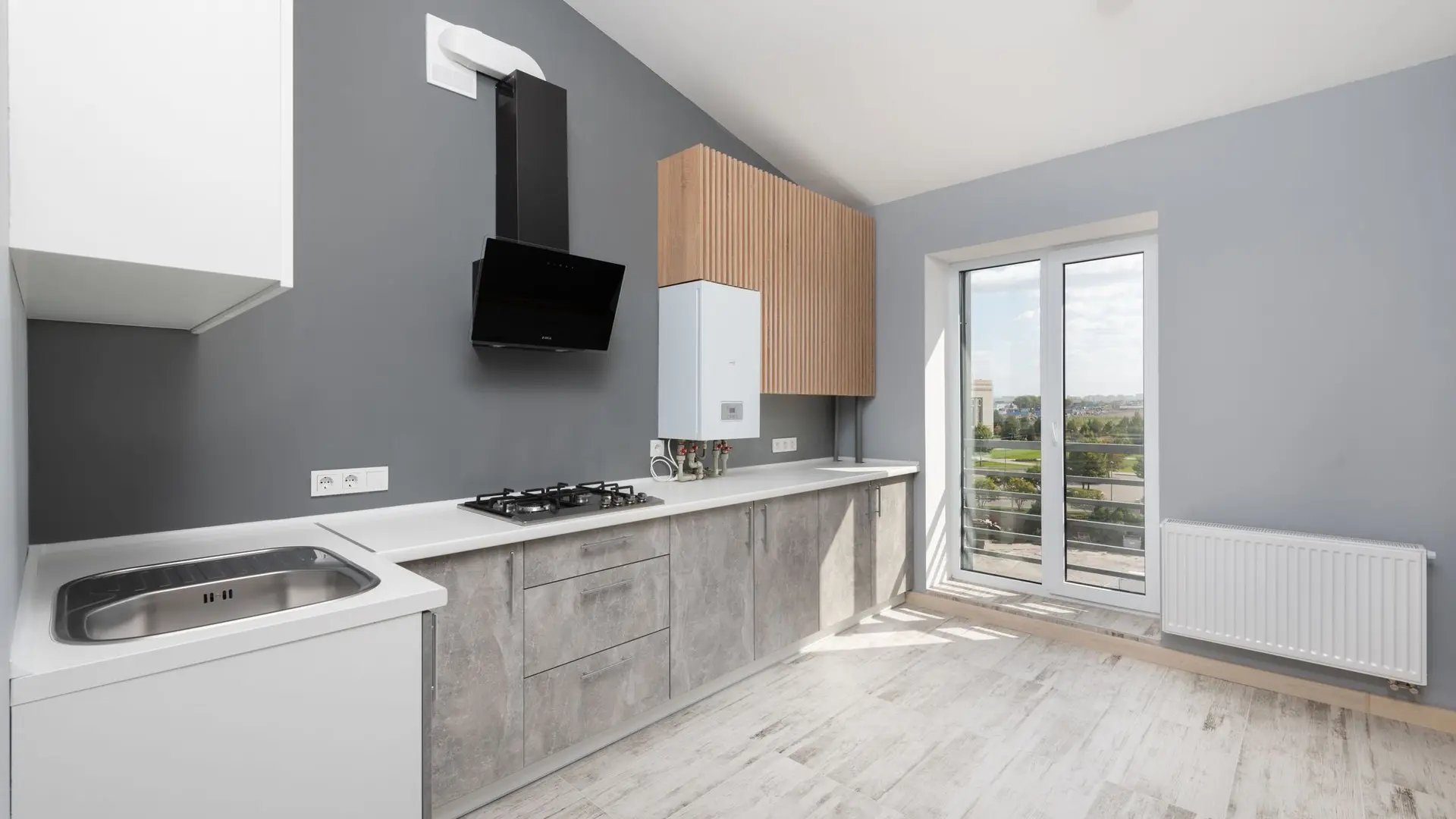
Modern kitchen with smooth grey walls and a glazed door

Getting the surface ready

Preparation is slow work, and it shows through the finish if it is rushed. Floors and furniture are covered first, then the surface is brought to a sound, clean state:

  • Old wallpaper is stripped and flaking paint scraped back, so the plaster bonds to something firm.
  • Loose or hollow patches are cut out and deep holes filled, so the skim is not bridging gaps.
  • Cracks and plasterboard joints get scrim tape so they are less likely to show through.
  • Metal beads go on outside corners for a straight edge that stands up to knocks.
  • With the power off, socket and switch plates are loosened so the plaster can run behind them.
Bathroom with stone-effect walls and a glass shower screen

Suction control and where PVA fits

Suction is how fast a surface drinks water. A very absorbent wall pulls the water out of fresh plaster before it has set properly, which can leave it weak and poorly stuck. The usual answer is to damp the wall down or seal it first with diluted PVA or a suction-control primer.

Smooth surfaces have the opposite problem. Old gloss paint and dense concrete give plaster little to grip, so they get a bonding coat with fine grit in it, which dries to a rough key a little like sandpaper. Plasterboard usually needs neither, apart from tape over the joints.

PVA is not right for every wall, though. On older solid walls, which rely on letting moisture escape, the Society for the Protection of Ancient Buildings (SPAB), a conservation charity, warns that sealing the surface with PVA or impervious paint holds back evaporation, trapping moisture in the wall or pushing it elsewhere. Conservation bodies favour breathable lime plaster on walls like that.
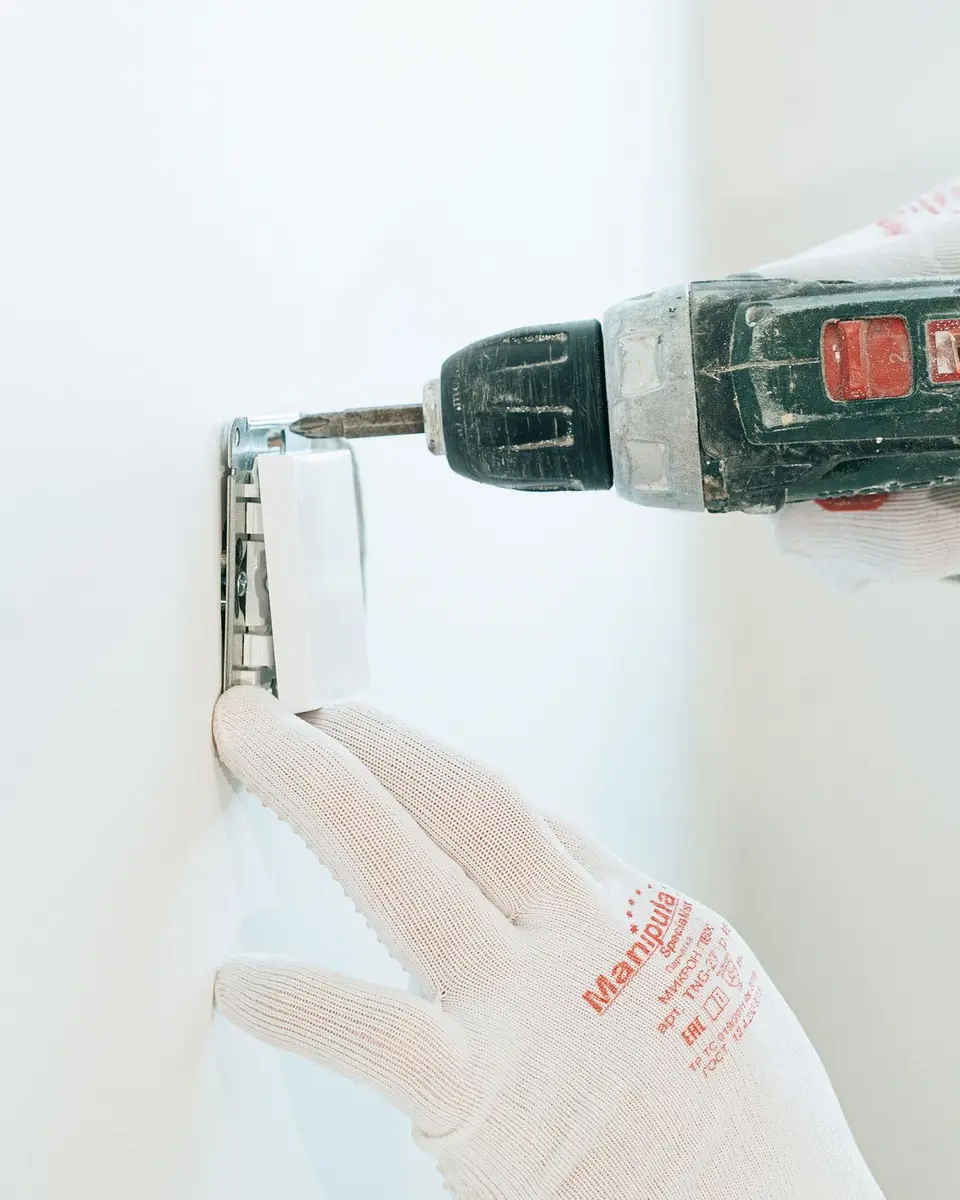
Gloved hands drilling a fixing into a smooth white wall

Two coats of finish plaster, then the trowel

Finish plaster goes on in two thin coats. The first is spread tightly over the whole area, and the second follows while the first is still soft, so the two knit into one even layer.

As the plaster firms up, it is trowelled again, more than once. Each pass flattens ridges and closes pinholes, with a light mist of water on the final passes. Timing matters more than force: trowel too early and the surface drags, too late and it will not close up.

Ceilings follow the same steps from a stable platform. Plasterboard ceilings take a skim well once the joints are taped; an old lath and plaster ceiling is a different case, covered in the questions below.
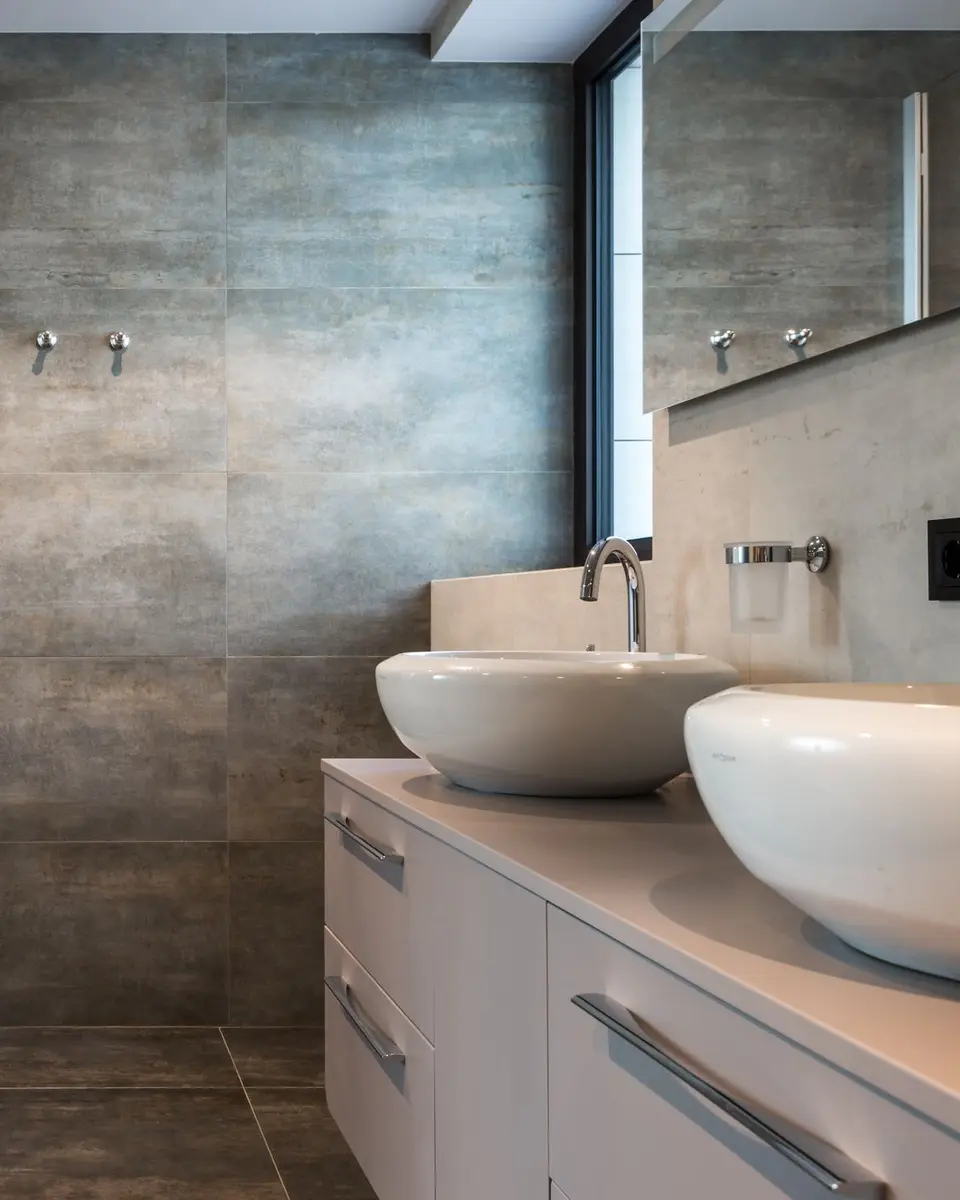
Concrete-effect bathroom wall above two round basins

Drying out and the mist coat

Fresh plaster starts dark and patchy and turns an even, pale colour as it dries. It can look dry on the surface within days, but one paint maker's rule of thumb is that plaster can take weeks to dry completely, depending on the material and the weather. Keep the room aired; once the plaster has set, an open window or a heater helps.

Painting too soon causes trouble. The same paint maker warns that emulsion applied to wet plaster is likely to crack and peel off.

The first coat on new plaster is a mist coat: ordinary white emulsion thinned with water. Fresh plaster is very absorbent, so the thin paint soaks in and seals the surface, which helps the following coats stick. Let it dry, then paint the colour on as normal.
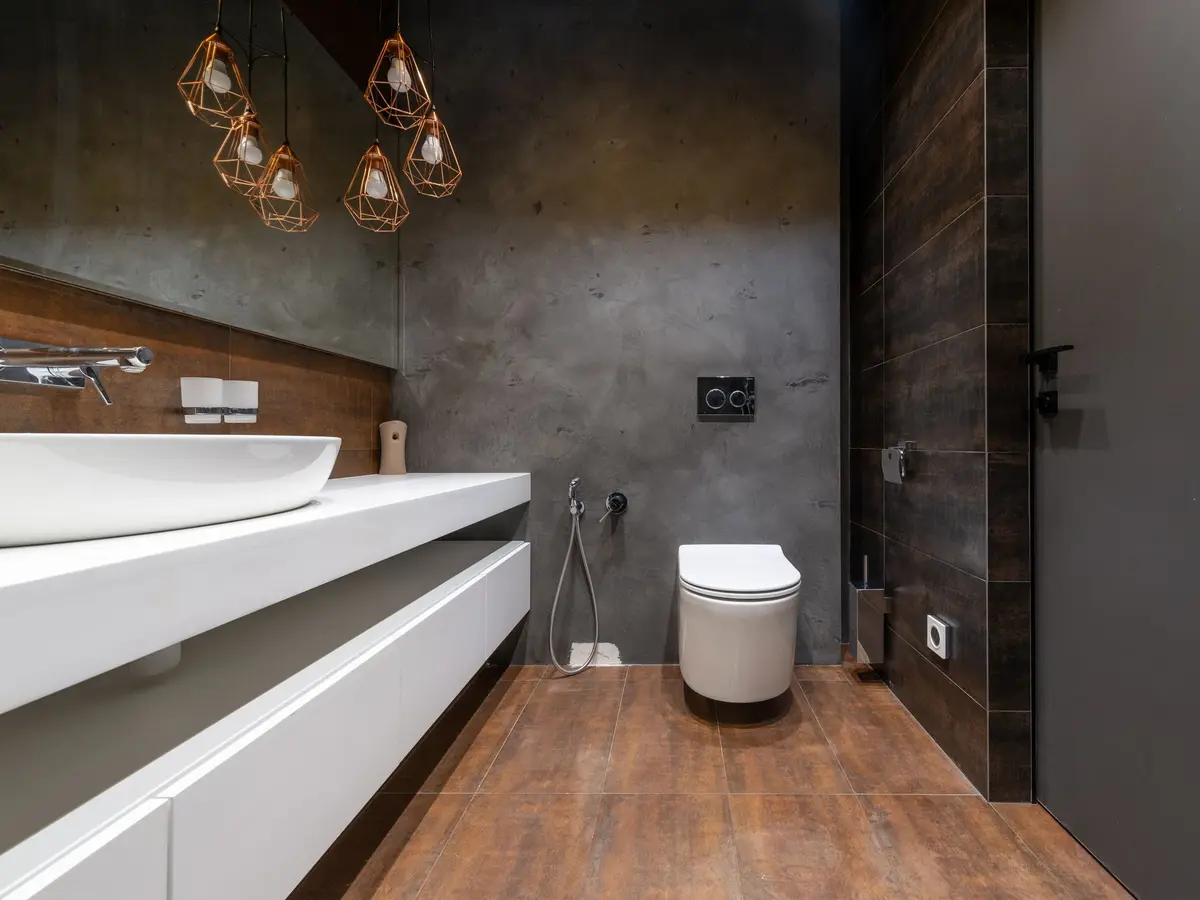
Bathroom with dark polished-effect walls and a wooden floor

When a wall needs re-plastering or boarding instead

A skim only covers what is underneath it, so where the wall itself is the problem there are two other routes. Re-plastering means hacking the old plaster back to the brick or block and building the wall up flat again with an undercoat before the finish goes on.

Boarding is the second. With drylining, plasterboard is fixed over the old wall on adhesive dabs or a frame of battens, then skimmed or taped and jointed. It suits a wall that is sound but uneven. It is not a damp cure: SPAB points out that plasterboard on mortar dabs lets moisture move from the wall behind to the surface.

These are the signs that a wall needs one of those routes rather than a skim:

  • Plaster that sounds hollow or crumbles when pressed, a sign it has come away from the wall.
  • Cracks that open up again after filling. Movement and damp are the usual causes of plaster failure, and the cause needs dealing with before the plaster is repaired.
  • Damp patches or woolly-looking crystals of salt on the surface, which mean the source of the moisture has to be found first.
  • Walls so far out of flat that a thin coat would follow every hollow.

Questions

Can you skim straight over painted walls?

Often, as long as the paint is firmly stuck. Sound emulsion is usually brushed down and treated for suction. Gloss and other shiny paints give plaster little grip, so they need a bonding coat first. Flaking paint has to come off, because new plaster is only as sound as the layer it sits on.

Does new plasterboard need skimming?

Not always. Plasterboard can be taped and jointed instead, with filler feathered over the seams and screw heads, then sanded and painted. A skim covers the whole board in a hard plaster face instead of painted paper, which gives a more even finish that stands up better to knocks.

Can an old lath and plaster ceiling be skimmed?

If the plaster is still firmly keyed to the laths and the ceiling is not sagging, it can usually be treated and skimmed. Press gently: if it moves, or bulges between the joists, the plaster has lost its grip and needs boarding over or replacing. A skim adds weight; it holds nothing up.

Why are there dark patches on my new plaster?

Dark patches are the parts still holding water, and they fade as the plaster dries. One that stays dark long after the rest has turned pale, or comes back after painting, may be damp coming through from behind, and paint will not stop that.
Sources

Services linked to this resource

  • Modern kitchen with smooth grey walls and a glazed door

    Skimming

    Skimming worn walls and ceilings in Bradford, from patched plaster to new plasterboard ready for decorating.

  • Empty room with blue walls and a wooden window

    Plasterer

    Plastering for walls and ceilings in Bradford, from local repairs to new room finishes.

  • Gloved hands drilling a fixing into a smooth white wall

    Drylining Walls

    Drylining walls in Bradford with plasterboard fixed to a suitable frame or masonry surface.

More resources

Other resources on plastering work.

More plastering resources
  • Bathroom with dark polished-effect walls and a wooden floor
    Damp & Mould Treatment

    Damp & Mould Treatment in Bradford

    Dry walls, clean plaster and no black spotting returning next winter. Our specialists find the moisture cause first, then repair the plaster properly. Request a quote through the form for damp and mould treatment.

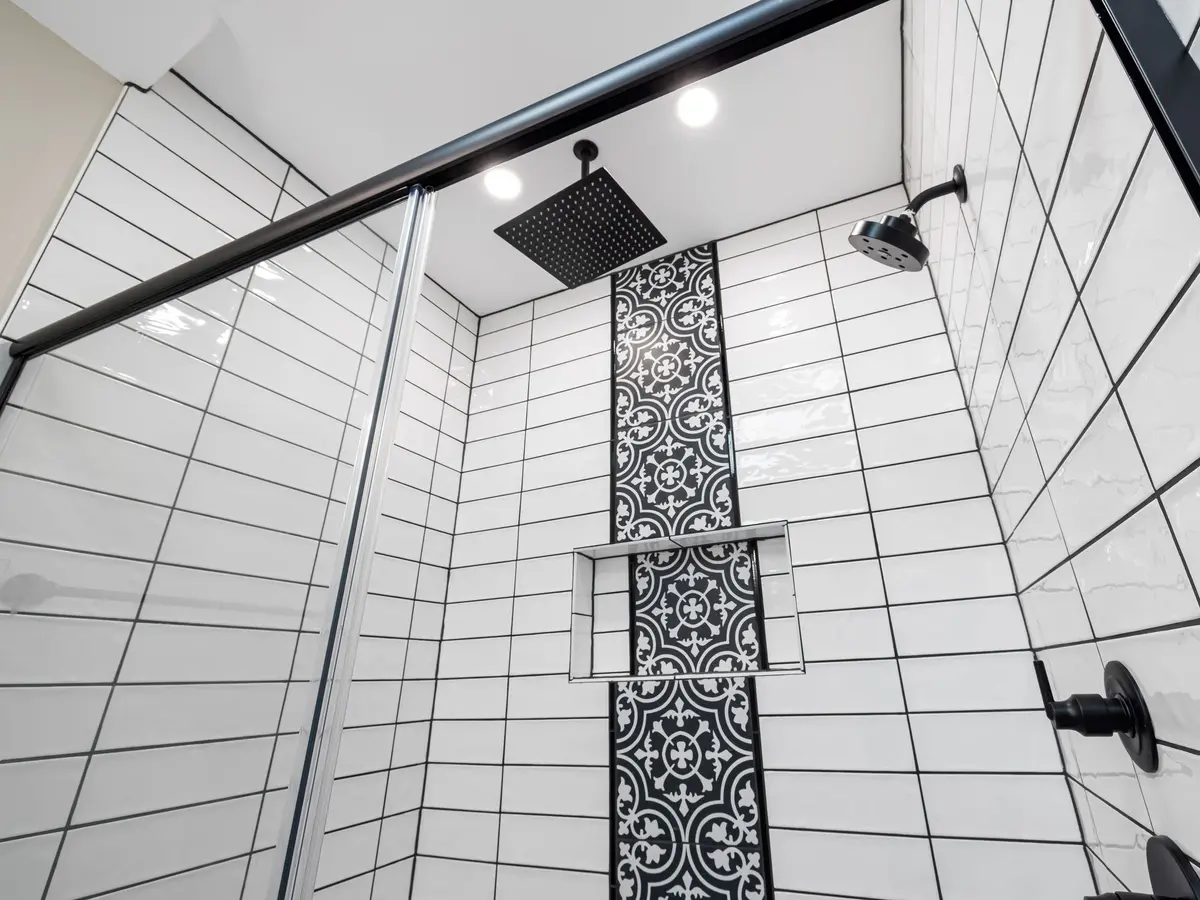
  • White tiled shower with a patterned tile strip
    Drylining Walls

    Drylining Walls in Bradford

    Get flat, ready-to-decorate walls without wet plaster, with the mess kept to one room at a time. Request a quote through the form and get in touch with a drylining specialist.

  • Empty room with blue walls and a wooden window
    Soundproofing

    Soundproofing in Bradford

    Thin party walls and light stud partitions are the usual culprits in Bradford homes, and they need planned board, insulation and sealed junctions. Request a soundproofing quote and get a plastering specialist looking at

  • Modern kitchen with smooth grey walls and a glazed door
    Fire Boarding

    Fire Boarding in Bradford

    Fire resistant boarding built to your specification, staged room by room so the rest of your home keeps working. Request a quote through the form for a plasterboard specialist in Bradford.

  • Empty room with blue walls and a wooden window
    Pebbledash

    Pebbledash in Bradford

    Stuck with cracked, blown pebbledash and worried what's behind it? Our pebbledash specialists remove it carefully, repair the brick and repoint in order. Request a quote through the form and get the wall sorted.

  • Bathroom with stone-effect walls and a glass shower screen
    Silicone Render Systems

    Silicone Render Systems in Bradford

    Walls that shed rain, hold their colour and never need repainting: that is what silicone render done properly gives a Bradford house. Request a quote from ND Plastering and its render specialists through the form.

  • Bathroom with stone-effect walls and a glass shower screen
    External Wall Insulation

    External Wall Insulation in Bradford

    Warmer rooms without losing floor space, and a rendered finish that needs no painting. Request a quote through the form for external wall insulation and have your solid-walled house looked at by a specialist.

  • Terraced houses with bay fronts painted in different colours
    Artex Removal

    Is it safe to plaster over Artex ceilings that contain asbestos?

    Test an Artex ceiling before anyone sands, scrapes or skims it. Once you have the result, send the ceiling details through the form and request a quote for the work it calls for.

  • Corner of a room with a concrete-effect wall, a tiled wall and a chair
    Lime Plastering

    Lime Plastering in Bradford

    Walls that stay dry, sound and true to the age of your house. Our lime plastering specialists match the coat to your solid walls. Request a quote through the form and get started.

  • Tiled shower recess with a mosaic feature strip
    Floor Screeding

    Floor Screeding in Bradford

    Uneven floor holding up your tiling or flooring? Our screeding specialists plan the right base for your Bradford room, from liquid screed to levelling compounds. Request a quote through the form today.

  • Cobbled mews lined with painted and brick houses
    Plasterer

    Plasterer in Bradford

    Cracked ceilings and patched walls cost you more the longer they wait. Our plastering specialists skim, board and repair homes across Bradford, so request a quote through the form and get the job scoped properly.

  • Sagging ceiling with water dripping from it
    Stud Walls

    Stud Walls in Bradford

    Get a stud wall that divides your room cleanly, holds insulation and arrives ready for decorating. Request your free quote and a plasterer who builds stud walls in Bradford will be in touch.

  • Pipe wrench, hammer and tape measure on a board
    Cornice

    Cornice in Bradford

    A cornice that sits tight and matches the rest of the room, repaired in the right order by a plasterer who knows decorative ceiling edges. Request a free cornice quote through the form.

  • Corner of a room with a concrete-effect wall, a tiled wall and a chair
    Coving

    Coving in Bradford

    A crack where the walls meet the ceiling usually means a ceiling that has moved. Send photographs of the corners through the form and request a coving quote from a plastering specialist who fits it.

  • Terraced houses with bay fronts painted in different colours
    Venetian Plaster

    Venetian Plaster in Bradford

    A Venetian plasterer checks the base wall for old patches and damp before any polished coat goes on, because decoration exposes every flaw. Request a quote through the form for Bradford feature walls.

  • Corner of a room with a concrete-effect wall, a tiled wall and a chair
    Skimming

    Skimming in Bradford

    Bradford's stone terraces and older plaster walls need checking before any skim goes on. Send photos and the room details through the form and request a skimming quote from a plastering specialist.

  • Sagging ceiling with water dripping from it
    Plastering

    Artex ceilings and textured coatings: testing for asbestos first

    Older textured ceilings can contain asbestos. Here is why they are sampled before anyone sands or drills them, and what the laboratory result means for removal or skimming over.

  • Corner of a room with a concrete-effect wall, a tiled wall and a chair
    Plastering

    Lime plaster in older solid-walled houses around Bradford

    Lime lets an old solid wall dry out. This covers how gypsum and cement can trap moisture instead, and what lime plastering involves, including its slower cure and the wait before decorating.

Covering Bradford and around it

ND Plastering covers Bradford and the 44 towns within about 20 miles of it, from Shipley and Baildon close by to Halifax, Huddersfield, Leeds and Harrogate further out.

Showing: Bradford

Open in Google Maps
  • Bradford
  • Shipley
  • Pudsey
  • Baildon
  • Cleckheaton
  • Bingley
  • Yeadon
  • Horsforth
  • Guiseley
  • Brighouse
  • Liversedge
  • Halifax
  • Heckmondwike
  • Rastrick
  • Morley
  • Batley
  • Keighley
  • Otley
  • Leeds
  • Elland
  • Mirfield
  • Dewsbury
  • Chapel Allerton
  • Ilkley
  • Huddersfield
  • Ossett
  • Lofthouse
  • Cross Hills
  • Wakefield
  • Todmorden
  • Garforth
  • Kippax
  • Skipton
  • Harrogate
  • Castleford
  • Darton
  • Colne
  • Littleborough
  • Wetherby
  • Nelson
  • Knaresborough
  • Pontefract
  • Bacup
  • Burnley
  • Saddleworth

See every area we cover

Quick Quote for your job

Tell us what needs doing and where the property is.

Get your Quick Quote

We use your details to respond to your enquiry. See our privacy policy.